
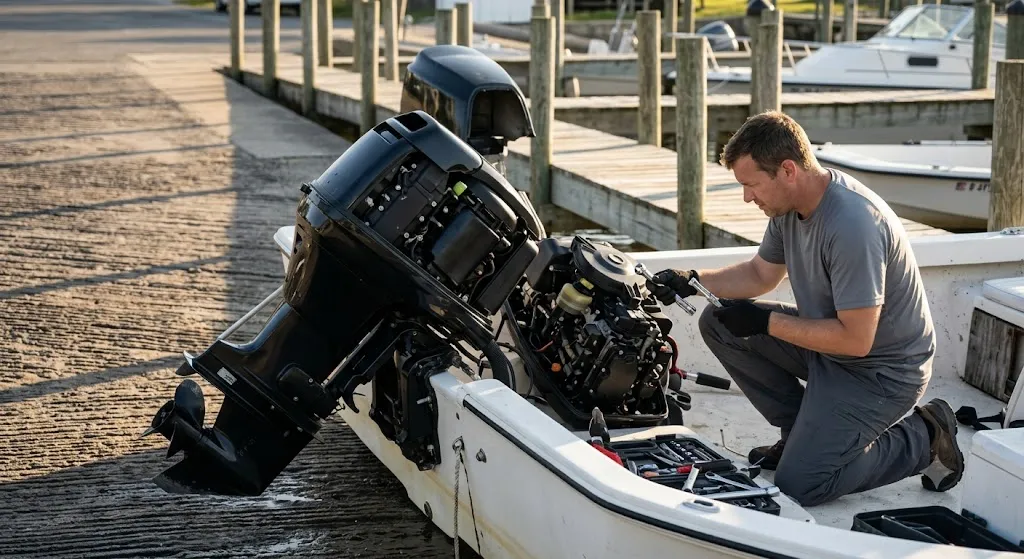
Few moments test a boater’s patience like turning the key and hearing nothing but silence. The good news is that most starting troubles come from a short list of simple causes. Whether you own a veteran motor or one of the newer outboard motors for sale, this troubleshooting guide helps you work through problems calmly, one logical step at a time.
Start With the Obvious Checks
Before reaching for tools, confirm the basics. Is the kill-switch lanyard in place? Is the gear selector in neutral? Is the fuel tank open and the vent screw loosened? Surprisingly often, the fix is something this small and simple. Check these items twice, even when you feel certain.
Look at the fuel line bulb as well. It should feel firm after a few squeezes. If it stays soft, air is leaking in somewhere, or the tank is empty. Always eliminate the simple causes first, because they cost nothing.
Stale Fuel: The Usual Suspect
Gasoline begins to break down within weeks, especially when it contains ethanol. Old fuel smells sharp or varnish-like and can clog tiny passages. If your tank has been sitting since last season, replace it before anything else.
Drain the old fuel responsibly, add fresh gasoline, and try again. Many stubborn engines roar back to life after this single change. Using a stabilizer in future seasons prevents the same problem from returning. It is a small effort compared with replacing a damaged engine. Keep the manual nearby so you can double-check each step.
Battery and Electrical Troubles
A weak battery gives itself away with slow cranking or clicking sounds. Check the terminals for corrosion and tighten loose clamps. Clean connections often restore power instantly without any need for replacement parts. Always disconnect the battery before touching wires.
If the battery tests well but nothing happens, inspect fuses and the key switch wiring. Water intrusion in connectors causes intermittent faults that seem to appear at random. A careful visual inspection usually reveals the culprit.
Spark Plugs and Ignition
Fouled or worn plugs cause hard starting, rough idling, and misfires. Remove one and examine it. A healthy plug has a light tan color, while black soot or an oily film suggests a deeper issue worth investigating.
Replacing plugs is inexpensive and takes only a few minutes. Use the type recommended in your manual, and set the gap correctly. Fresh plugs can restore smooth running and noticeably improve fuel economy. Keep a spare set aboard so a quick swap is possible.
Overheating and Cooling Flow
If the engine starts but then overheats, check the telltale stream first. A weak or missing stream points to a blocked intake, a worn impeller, or a stuck thermostat. Stop the engine immediately to avoid serious damage. Heat is the fastest way to turn a small fault into a large bill.
Clearing blockages sometimes solves the problem, but an old impeller usually needs replacement. This relatively cheap part protects a very expensive engine, so addressing it quickly is always the wiser option.
When a Part Fails, and You Need Help
Not every problem is a quick fix. Persistent smoke, metallic noises, or repeated stalling all deserve a trained technician. Pushing a struggling engine can turn a modest repair into a costly rebuild within a single afternoon.
If your repair estimate approaches the value of a replacement, it may be time to explore a Mercury outboard. Comparing repair costs against new engine prices gives you a clear, practical basis for the decision.
Steering, Trim, and Control Glitches
Sometimes the engine runs, but the boat misbehaves. Stiff steering, a trim unit that will not move, or a throttle that feels loose all point to cables, fluid levels, or worn linkages. Check each one gently before forcing anything.
Grease the steering pivot and inspect the control cable for kinks. A little lubricant and careful adjustment solve many complaints, and your boat will feel more precise and enjoyable every time you head out. Review the contents each spring and replace anything used or expired.
Conclusion
Keep a small waterproof box aboard with spare spark plugs, fuses, a plug wrench, a fuel filter, a spare propeller nut, electrical tape, and zip ties. These inexpensive items solve a surprising number of on-water problems.
Add the owner’s manual and a printed troubleshooting chart. When stress runs high, written guidance keeps your thinking clear. Preparation turns an embarrassing breakdown into a minor interruption you can handle.